
Hanover OTD:
Hybrid, Accelerated, Interactive
Notice: Trying to access array offset on value of type bool in /var/www/vhosts/eimdev.com/hanoverotd.eimdev.com/wp-content/themes/hanover-dpt-pages/flexible-fields/flx-content_section.php on line 144

The OTD Program nurtures evidence-based, culturally sensitive clinical competence through active engagement in a collaborative process between the student, client, and educator, where prior knowledge and experience serve as a foundation for further growth. Experiences in and beyond the classroom allow students to integrate academic knowledge, active learning, clinical reasoning, and self-reflection. Engagement in advanced practice opportunities in health systems and communities supports professional development, opportunities for leadership, and advocacy for the person, communities, populations, and the profession. Lifelong learning, collaboration, and professional judgment and behaviors encourage ongoing critical inquiry in evidence-based practice.
The culminating capstone project and doctoral capstone experience support the integration and understanding of advanced theory with practice and scholarship for the student. Understanding the connections between philosophical, theoretical, and practical knowledge, values, beliefs, ethics, and technical skills is facilitated, allowing for broad application toward engagement in occupation to improve health, participation, and quality of life.
Notice: Trying to access array offset on value of type bool in /var/www/vhosts/eimdev.com/hanoverotd.eimdev.com/wp-content/themes/hanover-dpt-pages/flexible-fields/flx-content_section.php on line 144
Online: Students will engage in online learning throughout the program. The faculty cultivates an active student-centered learning environment. The skills and knowledge are taught in a logical, sequenced progression from foundational to clinical to evidence-based practice. Students learn knowledge and skills theoretically, before putting them into practice.
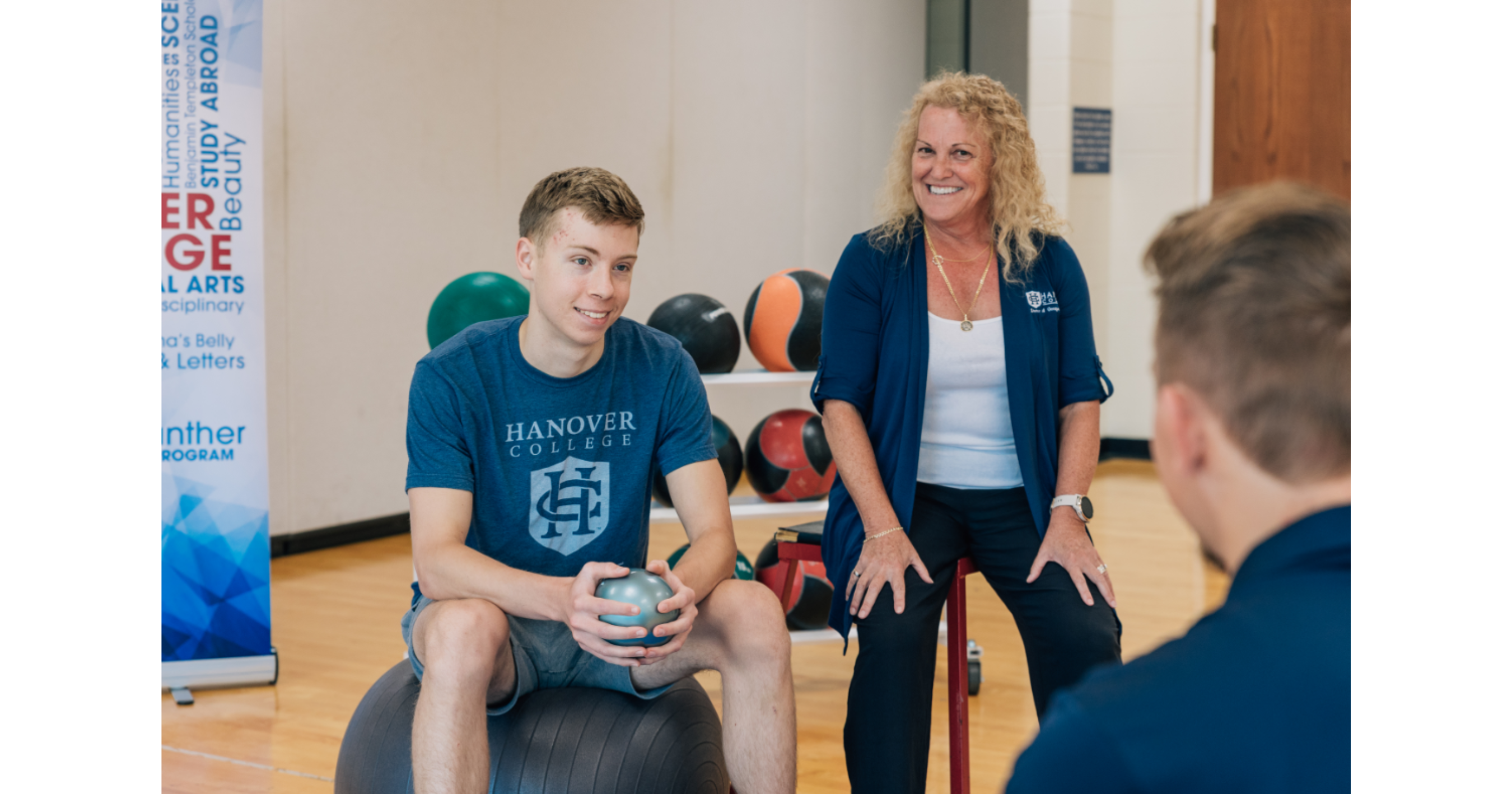
Lab Immersion: Onsite laboratory immersion sessions comprise approximately 20% (or 21 credits) of the curriculum and reflect the importance of hands-on skill acquisition for the occupational therapy student. Throughout the program, lab time is consolidated into a series of on ground lab immersion sessions scheduled during each academic semester to facilitate student travel. These lab immersion sessions range in duration from 3 to 10 days. This face-to-face time with faculty is focused on the development of the student’s communication, problem solving, clinical reasoning, and psychomotor skills required for effective client and occupational therapy practice management.
Fieldwork: Fieldwork education is a major emphasis in this program, comprising approximately 26% (or 27 credits) of the overall curriculum and consisting of three level I fieldwork experiences in the first year of the program for a total of 3 credits and two level II fieldwork experiences in the second year of the program for a total of 24 credits. The level II experiences are traditionally 12 weeks in length and are completed on a full-time basis or an equivalent 480 hrs. per experience. During these level II fieldwork experiences, students are paired with occupational therapists in clinical practices both regionally and nation-wide to offer a collaborative, structured learning environment that oversees the student’s professional development and transition to an entry-level practitioner. Field work educators (FWEs) mentor students in direct client care for approximately 40 hours per week and participate in a structured clinical education curriculum that applies the student’s didactic knowledge to real-time patient care. FWEs consist of licensed occupational therapists in the jurisdiction in which they practice who have a minimum of one year of experience in clinical practice, and possess clinical competence in the area of practice in which they will provide clinical instruction.
Capstone: In addition to the fieldwork experiences, the student is required to participate in a 14-week (560 hours) capstone experience in the final program semester (semester six). All course material and professional knowledge mentored by a subject matter expert in the student’s selected area is emphasis. This experiential placement is consistent with the interest of the student, under the guidance of an external mentor and faculty advisor. The experience creates and enhances the student’s professional skills and abilities allowing them to acquire advanced knowledge in the chosen area.
Notice: Trying to access array offset on value of type bool in /var/www/vhosts/eimdev.com/hanoverotd.eimdev.com/wp-content/themes/hanover-dpt-pages/flexible-fields/flx-content_section.php on line 144
Upon completion of the OTD Program, graduates will demonstrate the ability to:
- Incorporate an ecological perspective of health across the lifespan by developing and implementing theoretically sound, evidence-based occupational therapy practice and programs (Pursuit of Academic Excellence, Community Responsibility)
- Implement best practices that optimize client outcomes through the integration of critical thinking skills that support sound clinical reasoning and problem-solving abilities (Pursuit of Academic Excellence)
- Embrace and commit to the ethical standards, values, and attitudes of the profession through the use of ethical reasoning (Accountability)
- Advocate for the diverse occupational needs of people, communities, and populations to promote participation in meaningful and valued occupations across environments (Community Responsibility)
- Ensure client care incorporates an interprofessional, collaborative perspective (Respect for One Another, Community Responsibility)
- Use occupation-based assessments and implement occupation-based interventions supporting participation across environments for people, communities, and populations (Pursuit of Excellence, Accountability)
- Advance the roles of occupational therapy through effective leadership and advocacy (Pursuit of Excellence, Accountability)
- Demonstrate a commitment to professional growth and scholarly practice through lifelong learning and critical inquiry (Pursuit of Excellence).
Notice: Trying to access array offset on value of type bool in /var/www/vhosts/eimdev.com/hanoverotd.eimdev.com/wp-content/themes/hanover-dpt-pages/flexible-fields/flx-content_section.php on line 144
Program graduates: Hanover OTD will provide outcomes as this information becomes available.
Graduation rates: Hanover OTD will provide outcomes as this information becomes available.